




Over a century of innovative electrical installation technology.

The KAISER company was founded over 120 years ago. From today’s perspective, one would describe the then-young company as a start-up, as even its founders were banking on a technology that was still in its infancy at the time by producing components for electrical installations in buildings. After all, electrification in Germany had only just begun, and the appropriate installation solutions still had to be invented to make it a reality.

To this day, KAISER has played a decisive role in shaping the history of electrical installation through a constant stream of new product developments, setting standards for the entire industry. Join us on a journey through the company’s history and discover how it has successfully evolved over the decades. To this day, KAISER is regarded as a pioneer and innovation leader in the field of electrical installation.

Company history

1904–1925

  • 1904

    Company founded by Walther Kaiser and Ernst Spelsberg

    Ernst Spelsberg and Walther Kaiser founded the specialist electrical engineering factory Kaiser & Co. in Schalksmühle. Initially, the company produced armoured conduits for metal cables and insulating tubes made from cellulose-based materials, along with the necessary accessories for electrical installations. This marked the creation of one of the region’s first insulating tube factories and laid an important foundation for the emerging electrical industry in the Märkisches Sauerland.
  • 1905

    The first ‘Kaiserrohre’ leave the factory

    The new factory on Jahnstraße is completed, and production of insulated conduits gets under way. In the autumn of 1905, the first conduits, labelled ‘Kaiserrohr’, are dispatched. At the same time, the establishment of a network of sales representatives at home and abroad begins, including an early export contract to Brussels.
  • 1907

    Growth in the electrical installation market

    Kaiser & Co. increasingly supplies electricians and switch manufacturers with insulating tubes and accessories. The customer base grows, and the company is recognised within the industry as a specialist manufacturer of installation materials. It is also during this period that the company’s first letterhead is created, which remains in use until the early 1920s.
  • 1911

    Extension, new premises and range of sockets

    Kaiser & Spelsberg expands its factory with a large new building, as the old premises are no longer sufficient to accommodate staff and machinery. Work and machine rooms, a stamping shop, a paint shop, a warehouse, and packing and dispatch areas are created across several floors. At the same time, the product range expands: in addition to insulating tubes, the company now also manufactures junction boxes for switch installation and branch boxes, which become key products. With its own office building on the other side of Jahnstraße, production and administration are clearly separated for the first time.
  • 1914

    Expansion of the product range and the outbreak of war

    Caught between technical progress and the realities of wartime, Kaiser & Spelsberg faced a challenging period. The company expanded its product range to include robust, leaded versions and a steel sleeve with porcelain insulation. However, with the outbreak of the First World War, conditions changed fundamentally: transport routes broke down, a shortage of coal brought the steam engine to a standstill at times, and the factory was shut down in phases. Whilst Ernst Spelsberg was called up, Walther Kaiser continued to run the business. Women and girls were trained in production, whilst demand for Kaiser pipes remained high.
  • 1921

    Birth of Rolf Kaiser

    On 1 December 1921, Rolf Kaiser was born in Schalksmühle and grew up in a family characterised by entrepreneurial spirit, craftsmanship and a strong sense of responsibility. His father, Walther Kaiser, laid the foundations for the family business with courage and perseverance. At a time of economic and social upheaval, Rolf Kaiser learnt at an early age the importance of solidarity, drive and reliability. These values stayed with him throughout his life and shaped his understanding of corporate responsibility. Later, he himself became a key figure in the company’s development and led the Kaiser family’s history into a new era.

1926–1950

  • 1929

    A new beginning with the ‘Imperator’ junction box

    With the expansion of its ‘Imperator’ range, Kaiser & Spelsberg responds to new requirements in electrical installation. In addition to insulated and steel-armoured conduits, the company now manufactures cable boxes and accessories for surface-mounted installation. At the same time, Ernst Spelsberg develops a damp-proof box made of cast iron with brass gland fittings. The new products are launched successfully and help to expand production capacity and recruit new staff. The years 1927 to 1929 are thus marked by a distinct sense of new beginnings.
  • 1932

    Breaking new ground during the crisis and the first company logo

    With its first independent company logo, Kaiser & Spelsberg modernised its corporate identity and enhanced its recognisability on letterheads, advertisements and promotional materials. At the same time, the company is branching out geographically: together with Eugen and Lucien Guille, the company Tubéal – ‘Tubes et Accessoires de Lorraine’ – is founded in Thionville/Diedenhofen. The location in Lorraine offers ideal conditions for steel tube production. From autumn 1932, machinery is delivered from Schalksmühle, enabling tube production to commence in early 1933.
  • 1935

    The first exhibition stand

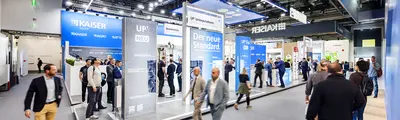
    With its first stand of its own at the Leipzig Trade Fair in 1935, Kaiser & Spelsberg brought its brand to the attention of a wide specialist audience. At the Great Technical Fair, the company presented insulating conduits, boxes and installation accessories, presenting itself as an ‘Insulating Conduit Works / Specialised Electrical Engineering Factory’. This trade fair appearance established direct contact with installers, planners and electrical wholesalers, and marked the start of the systematic use of trade fairs as a platform for electrical installation products and solutions.
  • 1946

    Necessity is the mother of invention:
    A tin can becomes a junction box

    During the post-war reconstruction period, scarcity and improvisation characterised everyday life at Kaiser & Spelsberg. Raw materials, building materials and electrical components were in short supply in 1946 and 1947. To ensure that installation materials were still available, junction boxes were made from American tin boxes: empty boxes were refurbished and used as housings for electrical installations. The theme ‘Necessity is the mother of invention – a tin can becomes a junction box’ symbolises this transitional period, during which ingenuity helped the company to remain operational despite extreme shortages of raw materials.
  • 1949

    Rolf Kaiser joins the company

    After serving in the war, Rolf Kaiser returned to a period of reconstruction. On 31 March 1949, he completed his apprenticeship at AEG in Essen and subsequently joined the family business, Kaiser & Spelsberg. In doing so, he not only took on a professional role but also the legacy of his father, Walther Kaiser, who had died prematurely. Amid a period of economic uncertainty, his arrival proved to be a crucial step in securing the future of the Kaiser side of the business and steering the company into the next generation.

1951–1975

  • 1956

    KAISER goes his own way

    The split from Kaiser & Spelsberg marked the beginning of a formative phase for Rolf Kaiser, full of responsibility and new beginnings. From the former joint venture, he established his own company, which he developed further with prudence, technical expertise and entrepreneurial courage. The reorganisation brought with it major personal and professional challenges, but at the same time paved the way for an independent future for KAISER. Rolf Kaiser led the company with clear decisions, foresight and a strong sense of responsibility towards his staff and family.
  • 1958

    Plastic replaces metal

    Kaiser & Spelsberg’s entry into plastics production marks the beginning of a new era. From 1958 onwards, the company focuses on the thermoplastic material polystyrene and gradually moves away from metal and thermosetting plastics. With the establishment of its own injection moulding facility and modern injection moulding machines, all-plastic boxes, all-plastic lids and junction boxes can be manufactured more quickly and cost-effectively. In particular, the two-piece Kaiser all-plastic lid quickly became a key revenue driver. The shift towards ‘plastic replacing metal’ thus laid an important foundation for the company’s continued success.
  • 1968

    The success story: the first cavity wall box

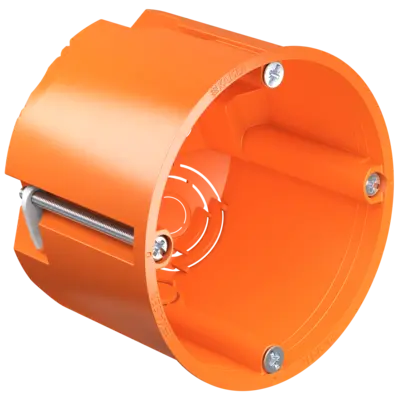
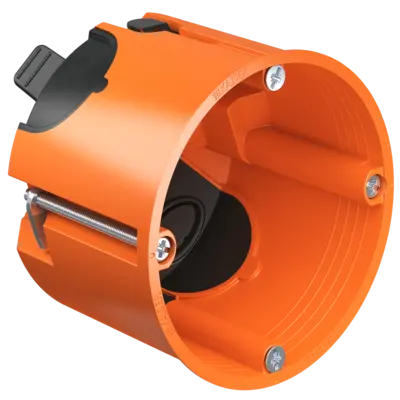
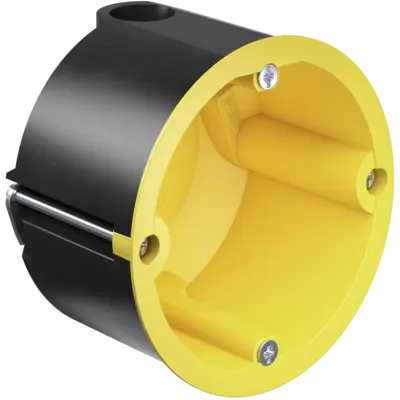
    With the world’s first cavity wall box, KAISER made a strong statement at the 1968 Hannover Fair regarding electrical installation in lightweight separators. The specialised box for plasterboard panels offered, for the first time, a tailored solution for cavity constructions and is regarded as a major innovation in construction technology. The key feature is the secure fixing within the cavity using straps and screws, for which KAISER secured a patent. To complement this, the company launched a matching cutter with a countersink hole cutter. This created a successful system comprising a cavity wall box and installation tool, with which KAISER took on a pioneering role worldwide.
  • 1973

    Snap-Box:
    The one-gang box with patented catch mechanism

    With the Snap-Dose, KAISER launches yet another groundbreaking innovation for electrical installation onto the market. The one-gang box with a patented catch mechanism and snap-fit connection is ready for market in 1973, despite the tooling originally being scheduled for a later date. The so-called Snap-Tunnel connector simplifies installation, ensures a secure fit and makes combining multiple boxes particularly convenient. The Snap-box quickly became a major market success and strengthened KAISER’s profile as a system provider for modern Flush-mounting and switch box ranges.

1976–1999

  • 1980

    New warehouse and dispatch centre in Ramsloh

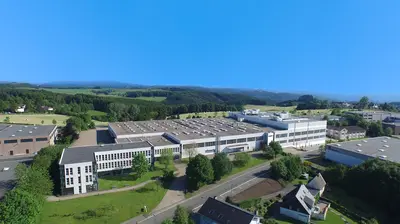
    KAISER’s future was now firmly rooted in Ramsloh. Following initial considerations in 1971, plans took concrete shape in 1979: at an ‘open day’, visitors were already able to view a model of the new site in the Ramsloh industrial estate. The first major step followed in 1980: construction of the new prefabricated parts warehouse began. On 5 December, the warehouse moved to its new location. With around 2,500 m² of storage space, the new building offered significantly more room than the cramped premises on Jahnstraße. There, finished products had recently been piled up in every available nook and cranny. Ramsloh opened up new possibilities – even if operating across two sites initially meant additional effort.
  • 1984

    “Are you ‘Kaisern’ yet?”

    This newfound self-confidence and more assertive market presence ultimately found a distinctive expression when the new sales term “Kaisern” was registered as a word and design mark with the Patent Office – a neologism that was successfully used in advertising with the slogan “Kaisern Sie schon?” This was the perfect way to inextricably link the company name with its products.
  • 1985 and 1989

    Burkard and Ulrich Kaiser join the company

    In the mid-1980s, a generational change began at KAISER. On 1 September 1985, Burkard Kaiser joined the company. As part of a training programme at the Bochum Academy of Administration and Economics, he worked his way through all departments – from the injection moulding shop through assembly to dispatch – and thus gained an in-depth understanding of every facet of the company. On 1 May 1989, Ulrich Kaiser followed his brother into the company, having completed his apprenticeship and induction period at a local firm. To start with, he was trained in sales and exports. This marked the first time that both of Rolf Kaiser’s sons were working for the company – the third generation of the founding family was gradually taking on responsibility and playing a key role in important projects such as the construction of the new premises and the move to Ramsloh.
  • 1988

    Klemmfix:
    The world’s first plaster-free socket fixing

    With Klemmfix, KAISER developed the world’s first plaster-free fixing system for flush-mounting boxes, thereby setting a new standard for easy-to-install electrical systems. The fixing is simply snapped onto the one-gang box and secures it firmly in the drill hole – without the need for plaster. This solution offers significant advantages, particularly in renovations and large-scale fit-outs. At the same time, the first phase of construction is completed in Ramsloh, comprising a dispatch warehouse covering around 2,500 m². In this way, KAISER simultaneously strengthens its logistics, storage capacity and the foundation for the subsequent relocation of production and administration.
  • 1990

    KAISER taps into new markets

    Following the opening up of the Eastern Bloc, KAISER was quick to recognise the opportunities presented by new markets in East Germany and Eastern Europe. Under the motto ‘Go East’, the aim was to specifically target countries such as Poland, the Czech Republic and other Eastern European markets. From July 1990, Ulrich Kaiser took over as head of the export department and drove this development forward. At the same time, KAISER modernised its trade fair presence: at the Hannover Messe, the company presented itself with a stand designed to resemble a ‘construction site’, featuring sand-lime brick walls – a contemporary design that went down well with plumbers and architects.
  • 1991

    Burkard Kaiser becomes Managing Director

    With the official generational handover in the management team, a new phase of strategic development begins for KAISER. Burkard Kaiser takes over the management of the company in 1991, continuing the family tradition into its third generation. The focus is on further developing the product range, strengthening the brand and expanding the market presence in Germany and Europe. Investments in the Ramsloh site form an important foundation for this and lay the groundwork for innovations of the 1990s such as HaloX®, KompaX, ThermoX and FlamoX.
  • 1994

    90 Years of Development and Progress

    Looking back on 90 years of company history, KAISER celebrates a special anniversary in 1994. At the event, Rolf and Burkard Kaiser emphasise the importance of innovation and tradition. Around 200 employees from Schalksmühle, as well as sales representatives from across Germany, take part. An exhibition showcases historical metal products alongside modern plastic installation solutions, clearly illustrating the company’s technical evolution. Special tribute is paid to the company’s founding date, 7 December 1904. The anniversary highlights how the former insulated pipe factory has developed over the decades into a recognised specialist in modern installation systems.
  • 1998

    Rolf Kaiser steps down from the management board

    Rolf Kaiser’s departure from the operational management in 1998 marked the end of a defining era for KAISER. After decades at the helm of the company, he handed over the reins entirely to the next generation. Rolf Kaiser had played a decisive role in establishing the plastics technology division, the move to Ramsloh, and positioning KAISER as a specialist in Flush-mounting, cavity wall and concrete construction installations. His departure marks an orderly handover within the family. A focus on innovation, a commitment to quality and a systems-based approach remain central guiding principles and are further developed in the years that follow through programmes such as HaloX®, KompaX, ThermoX and FlamoX.

2000–2010

  • 2000

    A strong brand into the new millennium

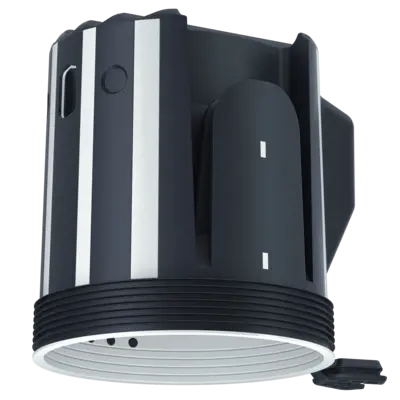
    KAISER enters the new millennium with a modernised brand identity: in 2000, a new logo is introduced, underlining the company’s claim to be a contemporary system provider of electrical installation solutions. At the same time, production begins on ThermoX, the first installation housing for low voltage luminaires in insulated hollow ceilings. The system expands the programme for the safe installation of luminaires and loudspeakers. At the same time, KAISER makes its debut at light + building in Frankfurt, the new leading trade fair for the electrical and lighting industry. Brand modernisation, a product offensive and the trade fair appearance thus mark a visible new beginning.
  • 2002

    AGRO becomes part of the KAISER GROUP

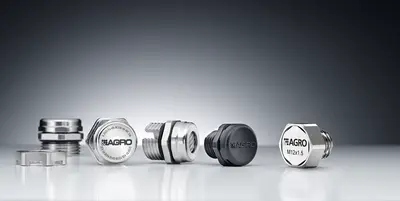
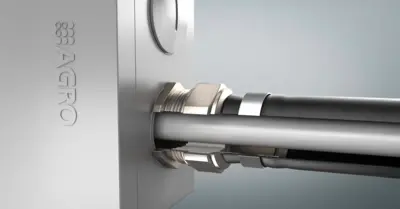
    With the acquisition of AGRO AG in Hunzenschwil on 1 January 2002, KAISER strengthened its presence in the European market and strategically expanded its cable gland segment. Under the established AGRO brand name, the existing programme of electrical installation materials and cable glands was continued and supplemented with KAISER products. In the same year, the electronics box became available for cavity walls, enabling the convenient integration of electronic components in drywall construction. At the same time, the Ramsloh site continued to expand by 3,000 m² with the fifth phase of construction.
  • 2004

    100 Years of KAISER
    The foundation of a good installation

    Under the motto “100 Years – The basis for a good installation”, KAISER celebrated its anniversary in 2004, showcasing at trade fairs and events its transformation from an insulated conduit manufacturer to a systems provider for flush-mounting, cavity wall and concrete construction installations. The anniversary year is accompanied by major product innovations: at bautec in Berlin, KAISER presents the FlamoX fire protection system for F30 ceilings. This is followed in April by the universal equipment carrier, which supports flexible installations in ceilings and walls and further complements the range of systems on offer.
  • 2005

    HELIA becomes part of the KAISER GROUP

    With the acquisition of HELIA – PLASTIC COLOR NV in Bornem, Belgium, in May 2005, KAISER strengthens its international presence and expands its expertise in the field of electrical installation materials. HELIA is a major player in the Belgian market and strategically complements the KAISER group. In June, ECON marks a key product innovation: the first air-tight two-component cavity wall box, developed for air-tight building shells. In addition, the “Betonbau-Legende” is launched as a planning tool for architects and designers. As a founding member of “Elektromarken – Starke Marken”, KAISER underlines the strength of its brand.
  • 2006

    System expansion with cable glands

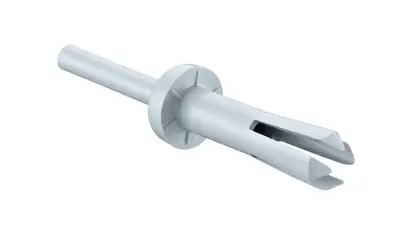
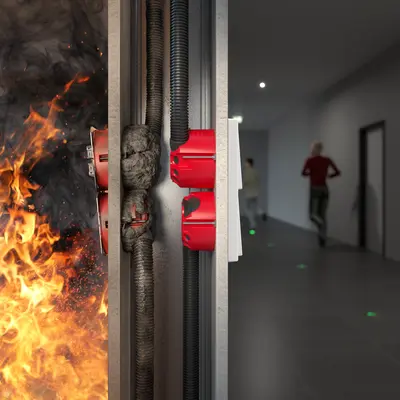
    In 2006, KAISER expanded its range with the comprehensive “AGRO Cable Glands” range, introducing a key product line for the German installation market. The programme was unveiled for the first time at light + building and is now also available from KAISER. In addition, KAISER is making further strides in fire protection and ease of installation: the HWD 90, the world’s first cavity wall box for fire protection walls, is launched. From August, the patentedFX4 quick-action screw speeds up installation in the cavity wall programme and reinforces the system concept.

2011–2020

  • 2017

    ATTEMA becomes part of the KAISER GROUP

    With the acquisition of ATTEMA B.V., based in Gorinchem in the Netherlands, KAISER further expanded its international presence in 2017 and specifically strengthened the KAISER GROUP’s product portfolio. ATTEMA is a leading brand manufacturer of innovative solutions in the market segments of installation, infrastructure and specialist products for the construction industry. Through this integration, the group gains additional expertise, expands its presence in the European market and lays a strong foundation for the further development of joint system solutions.
  • 2018

    Tradition meets innovation:
    50 years of cavity wall installation

    With the new O-range® generation, KAISER is highlighting its decades of expertise in cavity wall installation in 2018. Fifty years after the launch of the first cavity wall box, the company is once again setting new standards: optimised entries, flexible installation angles and a standardised screw-fixing system significantly simplify and speed up installation. Airtight membranes and compact designs ensure the air tightness of the building shell and increase efficiency on site. In addition, KAISER is expanding its range of systems with HaloX® installation housings and other solutions for modern installations.

2021–2026

  • 2022

    KAISER Connectivity launches new business division

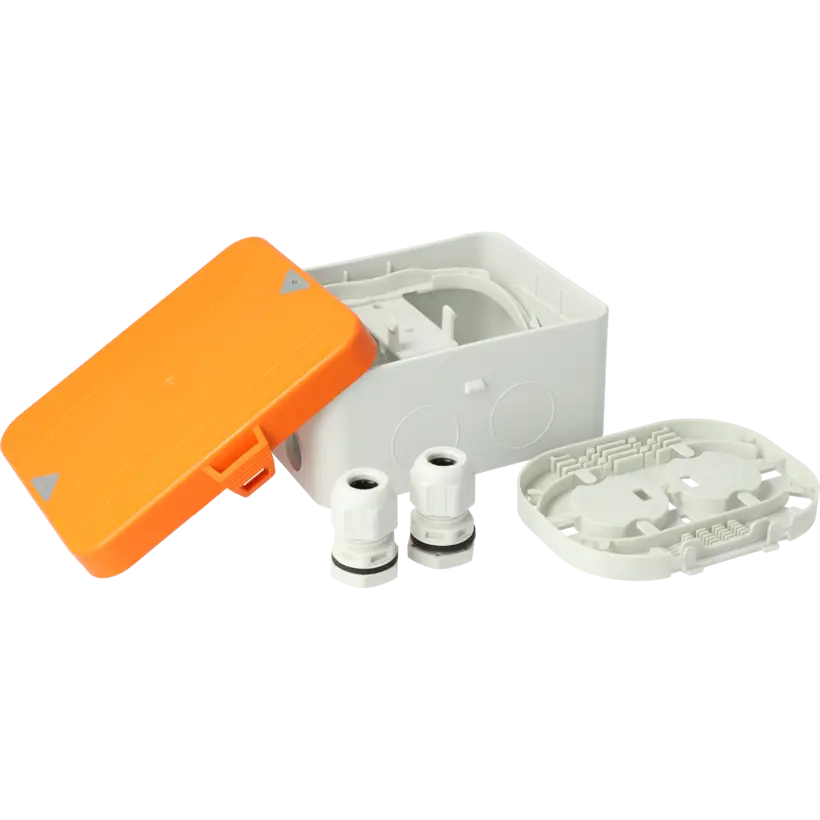
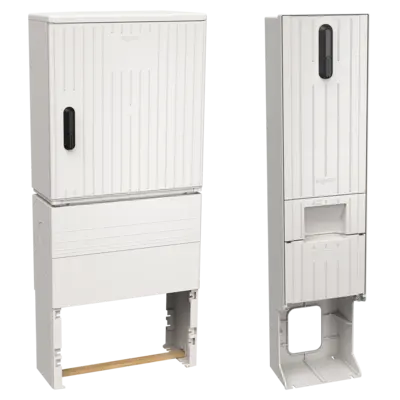
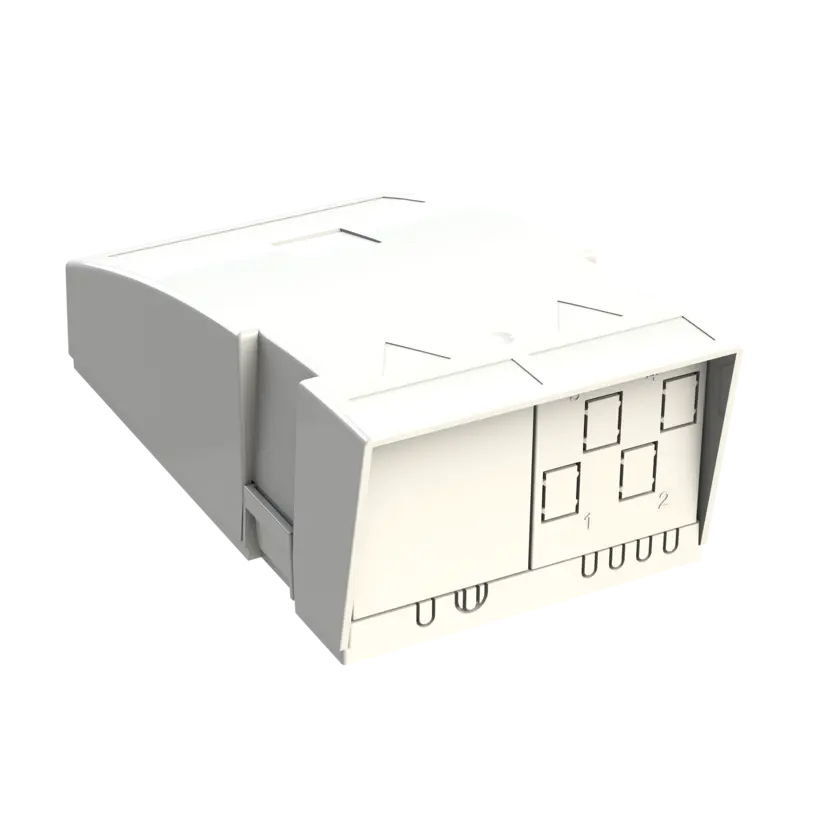
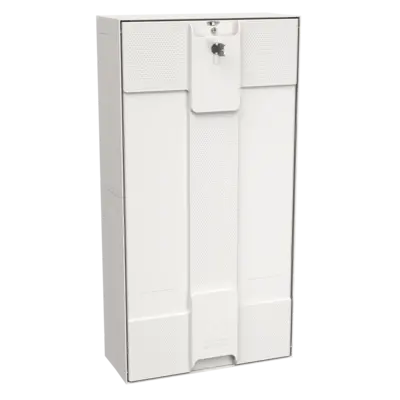
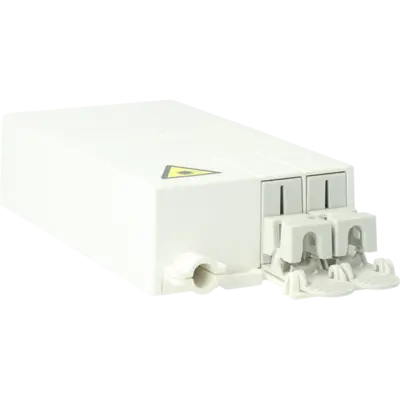
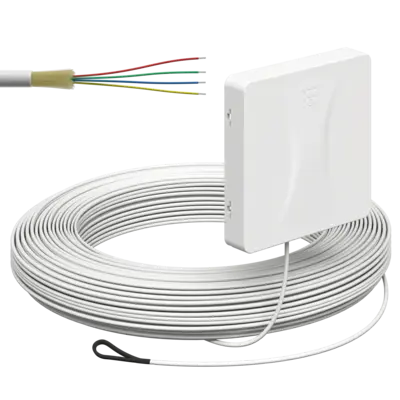
    With KAISER Connectivity, KAISER is entering a new business segment for broadband roll-out in 2022. The programme offers comprehensive solutions for modern fibre-optic infrastructures and specifically supports building distribution at network level 4. This makes it easier for electricians to plan and install high-performance data networks in residential and non-residential buildings. At the same time, KAISER is expanding its portfolio with O-range ECON® Fix for fast, air-tight cavity wall installations, extended HWD 90 approvals for fire protection walls, revised Prefix® boxes and EVolution EMC.
  • 2024

    KAISER invests in its site and the future

    By conducting an expansion of its production and logistics facilities at the Schalksmühle site, KAISER is strengthening its operational capacity, delivery reliability and role as a central development and manufacturing hub in 2024. At the same time, the company is further expanding its range of systems for modern construction methods: the HWD 68+ combines fire and sound insulation with air tightness, whilst new solutions for damp and clean rooms, solid timber, and modular and prefabricated construction enable safe, efficient and standardised installations.
  • 2024

    UP¹ sets new standards in the flush-mounted range

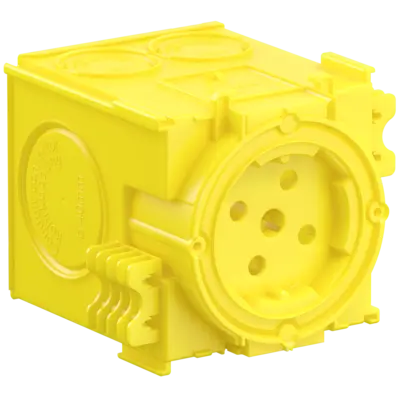
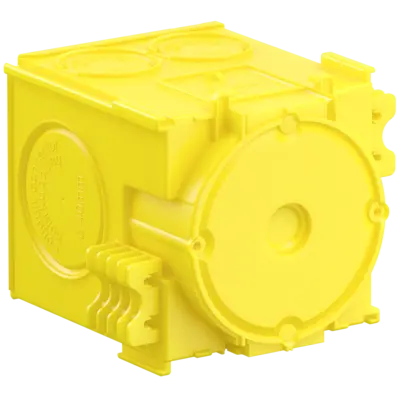
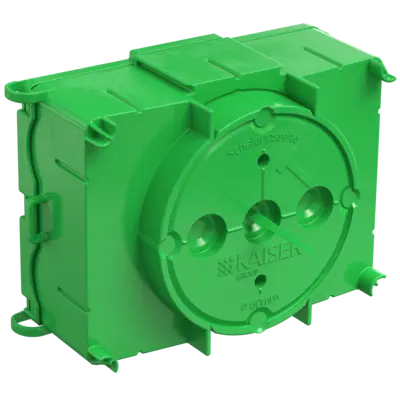
    With the new UP¹ flush-mounted range, KAISER sets new standards in design, functionality and modern installation technology. KAISER receives the German Design Award in 2025 for this innovation. At the same time, the company is pioneering new construction methods: with an installation housing for 3D-printed buildings, KAISER presents, for the first time, a solution for electrical installation in additive concrete construction. For traditional concrete construction, a central transition casing complements the product range for bundling and distributing electric cables in ceilings.
  • 2026

    Our UP¹ range
    Designed by tradespeople, made by KAISER!

    With the UP¹ range, KAISER is focusing on the further development of its flush-mounted product range in 2026. The new generation is designed for all standard installation methods and includes variants for air-tightness and particularly quick installation. More installation space, integrated ribs and toolless combinations ensure high flexibility, efficiency and practical fitting in residential and commercial buildings. At the same time, KAISER is expanding its Connectivity business segment with the FlexBox Connect, a modular fibre-optic building distribution unit.